Credit score is one of the most important parameters to avail credit in India and Credit Information Companies are the ones that keep a track of your financial health.
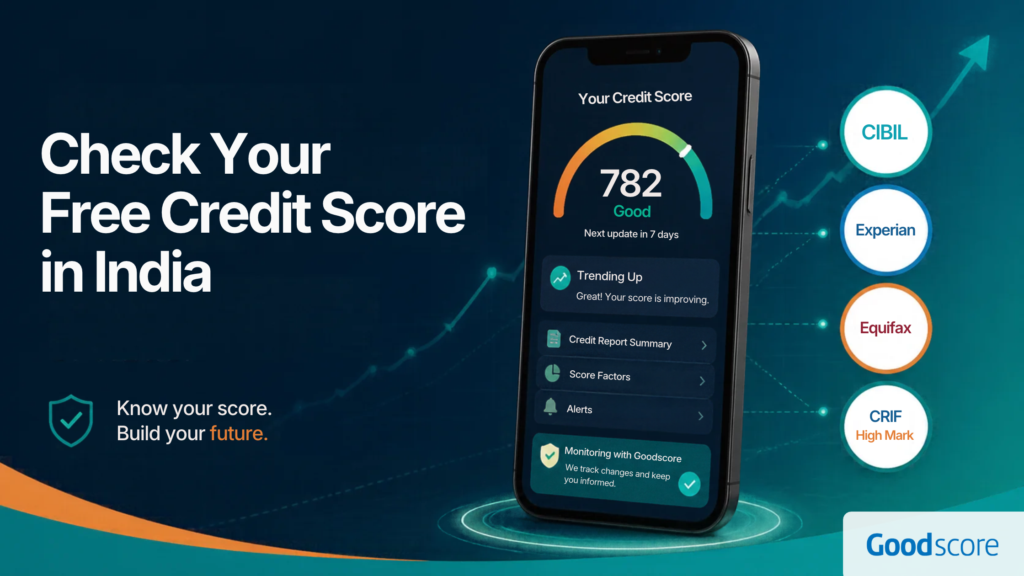
India has four RBI-licensed credit bureaus: TransUnion CIBIL, Experian, CRIF High Mark and Equifax. Each one of them tracks and maintains the record of your credit transactions so that lenders can refer to it whenever you apply for fresh credit. These credit bureaus are obligated to offer one full free credit report, including your score, once every calendar year. You can claim your free credit report on the bureau’s own website, or see your score through app platforms like Goodscore.
This article explains how you can check credit score from all 4 bureaus for free, how often it’s worth checking, and what lenders actually look at when they make a hard inquiry of your credit score.
The four credit bureaus in India
All four are credit information companies (CICs) licensed by the Reserve Bank of India. Banks and NBFCs report your loans and cards to them, and each bureau builds its own report and score from that data based on their internal algorithms.
| Bureau | Score range | Official Website |
|---|---|---|
| TransUnion CIBIL | 300-900 | cibil.com |
| Experian India | 300-900 | experian.in |
| CRIF High Mark | 300-900 | cir.crifhighmark.com |
| Equifax India | 300-900 | equifax.co.in |
How to check your score with each bureau
Each bureau’s free annual report contains your score, your personal details, every loan and card reported in your name, your credit utilization, repayment history and the enquiries lenders have made. The steps to check your free credit report from each bureau’s official website slightly differ, however, you still need to keep your PAN, date of birth and the mobile number linked to your loans handy before you start.
Steps to Check Credit Score at TransUnion CIBIL
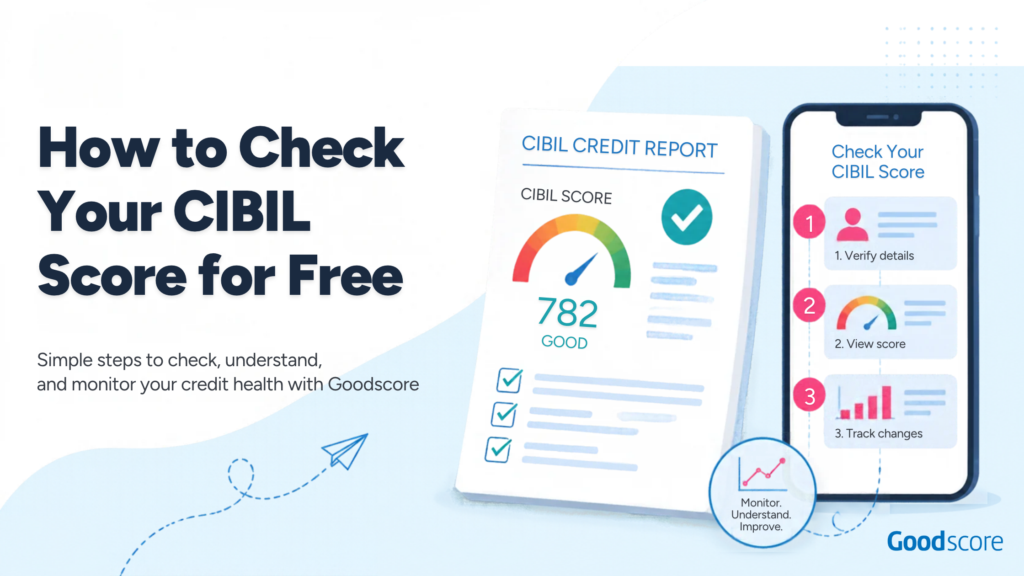
- Go to cibil.com and choose the free CIBIL Score and Report.
- Register with your name, email, PAN, date of birth and mobile number, then verify with an OTP and a few questions for authentication.
- View your score and report on the myCIBIL dashboard and download the PDF.
Also Read: How to Check CIBIL Score Free
Steps to Check Credit Score at Experian India
- Go to the consumer section of experian.in and choose the option to get your credit report.
- Enter your name, PAN, date of birth and mobile number.
- Verify your identity with the OTP sent to your phone.
- View or download your Experian score and report.
Steps to Check Credit Score at CRIF High Mark
- Open the CRIF High Mark consumer portal at cir.crifhighmark.com.
- Enter your email address, then your full name, date of birth, mobile number, address and PAN or Aadhaar number.
- Answer the security question based on your credit records.
- Download your report once verification is complete.
Steps to Check Credit Score at Equifax India
- Go to the official Equifax India website and select the free credit report option.
- Enter your full name, PAN, date of birth and mobile number.
- Verify your identity with an OTP.
- Access and download your report.
Which method should you use?
| Requirement | Best Option |
|---|---|
| Applying for a home or car loan soon | Pull your free report from all four bureaus a few weeks before you apply, so there’s time to fix errors. |
| Your lender told you which bureau it uses | Check that bureau’s report directly on its official site. |
| You want to watch your score month to month | Use an app like Goodscore that offers credit score from multiple bureaus and also offers daily refreshes and tracking |
| You’ve just closed a loan or card | Check one or two bureaus after a month or two to confirm the account shows as closed. Or track your financial activity on Goodscore to see if the closed accounts are marked correctly |
| Your credit score is low or your credit application is being rejected | Any bureau to see the errors in your credit report. |
If you’d like to keep an eye on more than one bureau without logging into each site, the GoodScore app shows your credit score from CIBIL, Experian and CRIF High Mark with daily refreshes to help you keep a track of the same. GoodScore app also offers credit-improvement services to help you build and improve your score.
How often should you check your credit score?
Though there is no defined rule around checking your credit score on a set schedule, it is best to keep a track of it at least on a monthly basis to see everything is being updated correctly by the lenders. When you check your credit score on your own, it is referred to as a soft inquiry and has no negative impact on your score. There are a few things that you should keep an eye on when checking your credit score to avoid an element of surprise.
- Make sure you check your credit score before any loan or credit card application. Ideally a few weeks ahead, so you have time to dispute anything wrong.
- A month or two after you close a loan or card. Lenders report on a cycle, and closed accounts are the most common thing to show up wrongly.
- See if your score is dropping without you making any changes in your financial habit, it could be because of a wrong loan or credit card entry.
- After any credit rejection. The report usually explains why.
Since 1 January 2025, RBI requires lenders to report to bureaus every fortnight, so all your payments records, credit utilization and new/old accounts addition/deletion should be updated in your report accordingly.
What lenders look at besides the score
A good credit score surely improves your chances of getting a credit product on your terms, but that is not the only thing that lenders look at while reviewing your credit application. When a lender pulls your file, it reads the full report and sets it against your income and other parameters, like
- Repayment history (DPD). The report shows days past due, month by month. A single 30-day delay last year reads very differently from repeated 90-day delays.
- Active loans and cards. How many you have, how much you owe and how much of your card limit is being used frequently.
- Recent enquiries. Several hard enquiries in a short time suggest you’re shopping hard for credit, which makes lenders cautious.
- Income and existing EMIs. Most lenders cap how much of your monthly income can go to EMIs, often called FOIR (fixed obligation to income ratio).
- Employment stability and lender policy. Your job history, employer category, city and the lender’s own risk appetite.
So an application with a credit score of 780 but heavy EMI load can be declined, whereas, an application with 720 credit score but low financial obligations might get approved.
India has four RBI licensed credit information companies (CICs), namely, TransUnion CIBIL, Experian, CRIF High Mark and Equifax. Each of them collects the data of your financial health from the lenders and creates their own credit report based on their internal algorithms. Because of their varied calculator methodologies, your credit score will slightly differ across all bureaus.
Yes, all credit information companies are required to offer one free credit report per calendar year to the individuals. Many banks and apps also provide free credit scores in partnership with these bureaus, however they may charge a nominal fee to help you track your score on a monthly basis.
It depends on the lender and the product. Many lenders use CIBIL, and some pull reports from more than one bureau, depending on the type of credit application. No single score is used by everyone, so if you’re unsure, you can ask the lender which bureau they are checking to assess your application.
Check before any loan or card application, a month or two after closing a loan or card, and regularly through a monitoring tool is often considered ideal. Regular checks help you catch errors or any fraudulent activity early, and checking your own score never lowers it.
PAN is the standard identifier, and most bureaus ask for it. It is directly related to your financial activity and is often used for fetching your records from lenders. Some bureaus may ask for other identity documents as well, but PAN remains the most important one.
No. When you check your own score, it’s regarded as a soft enquiry, and soft enquiries aren’t used in scoring. Only hard enquiries, which happen when a lender pulls your report because you applied for credit, can affect your score.
You most likely have no credit history yet, so the bureau shows NH, NA, 0 or -1 instead of a number. That isn’t a bad score. It just means there’s nothing to score. A first credit card or small loan, repaid on time, usually starts your history.
Your score changes when lenders report new data. Since January 2025, RBI requires lenders to report fortnightly, as on the 15th and the last day of each month, so your score can move twice a month.
The report is the full record: your accounts, repayment history, enquiries and personal details. The score is a three-digit summary calculated from that report. Lenders read both, because the report explains the number.
Many are, but check first. Find out who runs the app, which bureau it uses, what you’re consenting to and how you can withdraw consent. Avoid apps that ask for permissions they don’t need.