
A sinking fund is one of the simplest ways to avoid sudden money stress in India. Instead of taking a loan or using your credit card when a big expense comes up, you save a small amount every month for that exact goal. It’s like creating your own EMI, but without interest.
What is a sinking fund?
A sinking fund is a separate savings bucket for a planned future expense. These are not emergencies. These are predictable costs that hit once or twice a year, like:
- school fees and annual books
- health insurance premium
- car or bike insurance
- festivals, gifts, weddings in the family
- home repairs, appliances replacement
- yearly travel
Most people know these expenses are coming, but they still get surprised because they don’t save for them each month.
Why sinking funds work so well in India
Indian expenses are not evenly spread across months. Some months are heavy due to fees, functions, insurance renewals, and travel. If you don’t plan, you end up doing one of these:
- Break your long-term savings
- swipe credit card and pay interest
- Take a personal loan
- miss an EMI or bill due date
A sinking fund prevents that. Your monthly budget stays stable, and you don’t need last-minute borrowing.
How to create a sinking fund (step by step)
Step 1: List your yearly big expenses
Take 10 minutes and write them down. Use last year’s bank statement if needed.
Example list:
- School fees: ₹60,000 per year
- Health insurance: ₹18,000 per year
- Vehicle insurance: ₹12,000 per year
- Festival + gifts: ₹25,000 per year
Total = ₹1,15,000
Step 2: Convert the yearly cost into a monthly amount
Divide each expense by 12.
- School fees: 60,000 ÷ 12 = ₹5,000 per month
- Health insurance: 18,000 ÷ 12 = ₹1,500 per month
- Vehicle insurance: 12,000 ÷ 12 = ₹1,000 per month
- Festival + gifts: 25,000 ÷ 12 = ₹2,083 per month
Monthly sinking fund target = about ₹9,600
Now you know exactly what to save each month, so you don’t panic later.
Step 3: Keep it separate from the main savings
Do not keep it in the same account you use for daily spending. Otherwise, it will slowly disappear.
Good options:
- separate savings account
- short-term RD
- a simple “goal” bucket if your bank supports it
Keep it accessible, because you will use it within the year.
Step 4: Automate on salary day
Set an auto-transfer on salary day into your sinking fund account. If you automate it, you won’t skip months.
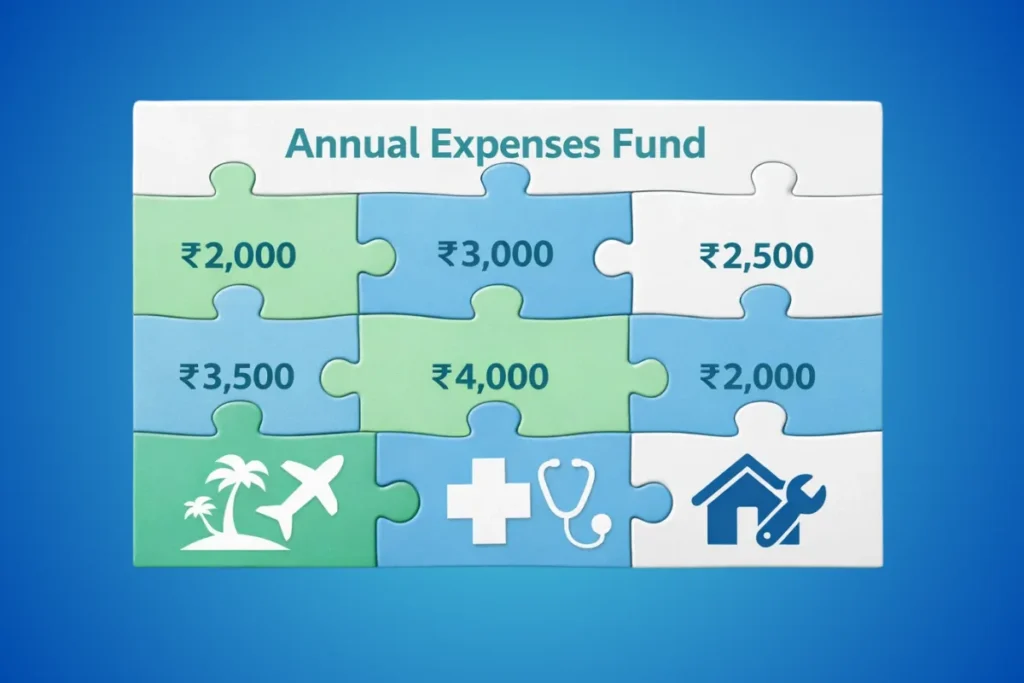
If your monthly budget is tight, start smaller. Even ₹2,000–₹3,000 per month creates a big cushion over time.
How to use the fund without guilt
When the expense comes, pay from the sinking fund. That’s the whole point. Don’t feel like you are “breaking savings”. This money was created to be spent.
After the payment, restart the monthly savings.
Common mistakes to avoid
- Treating sinking fund as an emergency fund. Keep them separate.
- Saving without a target. Targets make it real.
- Keeping it in the same spending account.
- Creating too many funds and then giving up on them. Start with 2–3 big yearly expenses first.
How does this help your credit health?
When you handle planned expenses with sinking funds, you’re less likely to revolve a credit card balance or take short-term loans. That indirectly supports a healthier credit profile. If you want to stay loan-ready, it helps to check your credit score once in a while so you know where you stand.
FAQs
What is the difference between a sinking fund and an emergency fund?
An emergency fund is for unexpected expenses, such as job loss or a medical emergency. A sinking fund is for planned expenses that you know are coming.
Where should I keep sinking fund money?
Keep it in a separate savings account or short-term RD where it’s safe and easy to access within the year.
How many sinking funds should I create?
Start with 2–3 important ones: insurance, school fees, and annual travel. Add more only after you build the habit.
What if I miss one month?
Don’t quit. Continue next month and adjust by saving a little extra later. Consistency matters more than perfection.
Is a sinking fund better than using a credit card EMI?
Yes, for planned expenses, because you avoid interest and fees. Credit card EMI should be a backup, not the plan.