
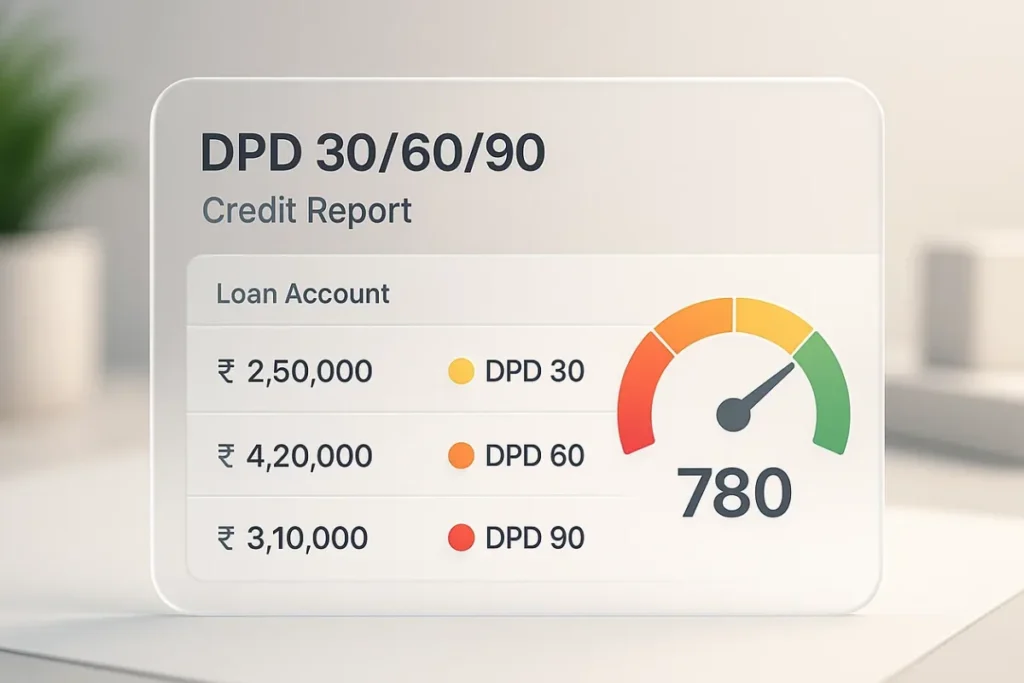
If you have ever checked your credit report and noticed numbers like 30, 60, or 90 written under a loan or credit card, you are not alone. These numbers confuse many people in India. This is called DPD, and it significantly affects your credit score.
Understanding DPD is essential if you want loan approvals, lower interest rates, or even a simple credit card approval. Let’s break it down in a simple way.
What Is DPD in a Credit Report?
DPD means Days Past Due.
It shows how late you were in paying your EMI or credit card bill.
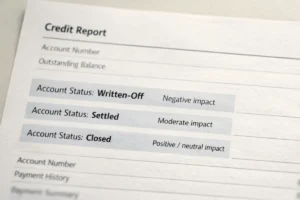
Banks and credit bureaus update this data every month. If you pay late, the payment will be recorded on your credit report.
For example
If your EMI was due on the 5th and you paid on the 10th, your DPD is 5 days.
DPD is shown month by month for each loan or credit card.
What Do DPD 30, 60, and 90 Mean?
DPD 0 or STD
This means you paid on time.
This is perfect and what lenders want to see.
DPD 30
You paid your EMI or bill 30 days past the due date.
This usually happens when you miss one payment cycle.
One or two 30 DPD marks are not ideal, but they are still recoverable. Thoda damage hota hai, but not permanent.
DPD 60
You are 60 days late.
This indicates repeated delays or significant payment issues.
At this stage, your credit score drops more sharply.
DPD 90
You are 90 days or more overdue.
This is considered a default risk by banks.
Once DPD crosses 90, lenders become very cautious. Loan rejections are standard after this.
How DPD Affects Your Credit Score in India
DPD directly affects your credit score.
Payment history has the highest weight in credit scoring. Even one missed payment can reduce your score by 50 to 100 points, depending on your profile.
Here is how lenders usually see it
- DPD 0 means a safe borrower
- DPD 30 means early warning
- DPD 60 means high risk
- DPD 90 means default behaviour
If you are planning a home loan, car loan, or personal loan, recent DPD entries are essential.
Common Reasons for DPD in India
Most DPD issues arise from small mistakes, not intent.
Some common reasons are
- Salary delay and EMI date mismatch
- ECS or NACH mandate failure
- Low balance on due date
- Forgot the due date while travelling
- Credit card minimum amount not paid
- Bank technical issues
Kaafi log bolte hain “maine paisa diya tha”, but bank record kuch aur dikhata hai. That is why tracking matters.
How Long Does DPD Stay in Your Credit Report?
DPD entries stay in your credit report for up to 36 months.
Older DPDs have less impact, but recent ones have greater impact.
If your last DPD was two years ago and everything since has been clean, banks may still consider your application.
Can You Fix or Remove DPD from Your Credit Report?
You cannot remove correct DPD entries just because time has passed. However, you can correct incorrect or unfair DPD marks.
Step 1: Check Your Credit Report Carefully
Look at
- Account name
- Month-wise DPD
- Payment dates
- Outstanding balance
Step 2: Collect Proof
Get bank statements, payment receipts, or confirmation emails showing you paid on time.
Step 3: Raise a Dispute
Raise a dispute with the credit bureau for the incorrect DPD entry. Please clearly indicate which month is wrong and attach proof.
Step 4: Follow Up with the Lender
Sometimes the lender delays updates. Call or email them to request that they correct the data shared with the bureau.
Step 5: Build a Clean Track Record
Even if old DPD cannot be removed, regular on-time payments help improve your score over time.
Slow process hai, but effective.
How to Avoid DPD in the Future
Some simple habits help a lot
- Keep the EMI due date 3 to 5 days after salary credit
- Maintain extra balance before the due date
- Enable auto debit and alerts
- Pay the credit card bill in full, not just the minimum
- Track your credit report every few months
If you are serious about loans or credit cards, you should regularly check your credit score and report updates so surprises na mile.
Final Thoughts
DPD 30, 60, and 90 are not just numbers. They tell lenders how disciplined you are with money.
One mistake does not ruin your future, but repeated delays can. The good part is that credit health can continually improve with discipline and awareness.
Aaj thoda dhyan doge, kal loan approvals easy ho jaayenge.
FAQs
What is DPD in simple words?
DPD shows how many days you were late in paying your EMI or credit card bill.
Is one 30 DPD very bad?
One 30 DPD is not ideal, but manageable if future payments are on time.
Does DPD affect home loan approval?
Yes. Recent DPD entries reduce the chances of home loan approval.
Can the wrong DPD be removed?
Yes. If the DPD is incorrect, you can dispute it with proof.
How often should I check my credit report?
At least once every 3 to 6 months to catch errors early.