
Credit reports are used by banks and NBFCs to judge how you handle loans and credit cards. Sometimes the report has mistakes. A wrong late payment, an old loan showing as active, or a spelling error in your name can hurt approvals and push your score down. Here is a simple, India-focused guide to the most common mistakes and how to fix them.
What Is a Credit Report Error
A credit report error is any wrong or missing detail in your report. It could be about your personal information, a loan or card you never took, an EMI marked as late even after payment, or an incorrect outstanding amount. These mistakes can occur due to delayed lender updates or data entry errors.
Most Common Credit Report Errors in India
- Wrong personal details
Spelling mistakes in the name, wrong PAN or date of birth, and an old address that has not been updated. - Closed loan showing as active
You completed the loan and received the NOC, but the report still shows it as open. - Payment not updated
You paid the EMI or card bill, yet the month is marked as late. - Incorrect outstanding balance
Your card shows a higher amount than the actual bill or the amount already paid. - Duplicate accounts
The same loan or card appears twice, which incorrectly increases the total outstanding amount. - Unknown account or fraud
A loan or card you never opened appears in the report. - Multiple or unknown enquiries
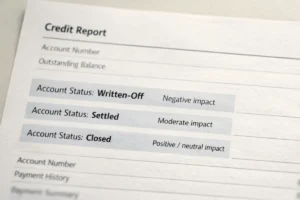
Too many enquiries or one from a lender you never contacted. - Wrong account status
Marked as settled or written off even after full payment. - Old loans missing
Positive history not visible, which reduces the depth of your credit track record.
How These Errors Affect You
- A lower score makes loans costlier
- Rejection for new credit cards or top-up loans
- Lower credit limits and fewer offers
- Extra verification and delays during applications
How to Read Your Report and Confirm the Error
- Download the latest report from a trusted source.
- Check Personal Information, Accounts, Repayment History, Enquiries, and Outstanding sections.
- Match every detail with your statements, NOC letters, and bank messages.
- Note the exact error with a screenshot or page reference.
Documents You May Need for a Dispute
- PAN copy and address proof
- Loan closure letter or NOC
- Bank statements or card statements showing payment
- Email or SMS confirmation from the lender
- FIR or cyber complaint if it is a fraudulent account
How to Dispute Errors with the Credit Bureau
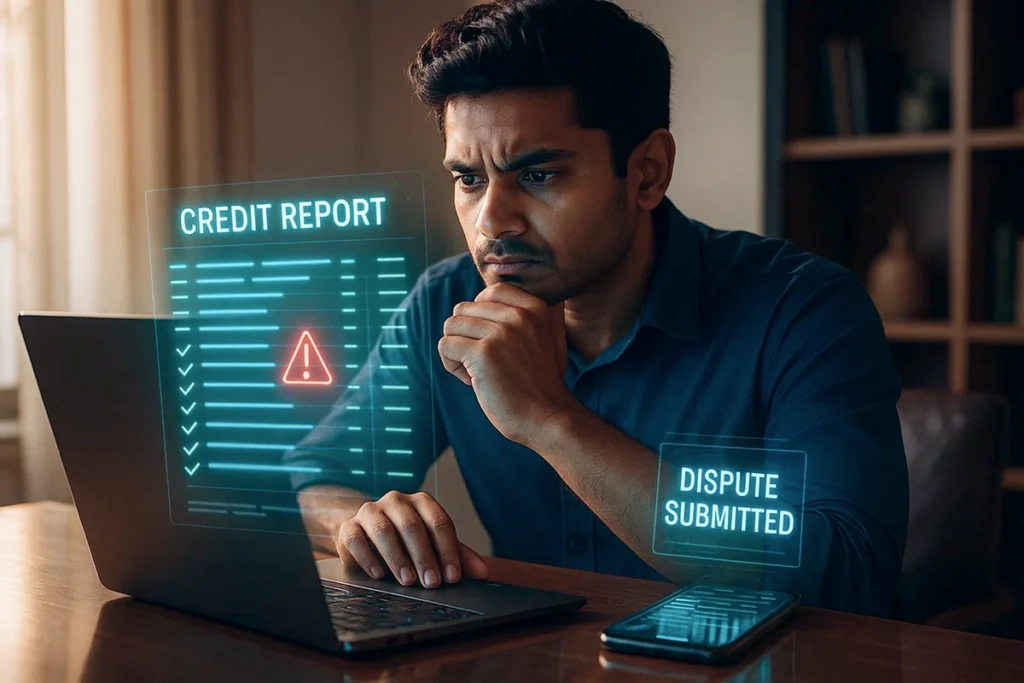
You can raise a dispute online with the relevant bureau. Follow these simple steps:
- Create or log in to your account
Go to the bureau portal and sign in. - Open the dispute form.
Look for “Dispute” or “Raise a dispute” in your dashboard. - Select the error type.
Choose personal detail, account information, repayment, balance, or enquiry. - Describe the issue clearly.
Mention the account number, month, and what is wrong in one or two precise lines. - Upload proofs
Add statements, NOC, or email screenshots that support your claim. - Submit and note the reference number.
Keep the ticket number for tracking. - Wait for verification
The bureau checks with the lender. This usually takes 15 to 30 days. - Check the updated report.
Once closed, download the fresh report and confirm the fix.
How to Work With Your Lender for Faster Resolution
Sometimes the quickest fix comes from the lender side.
- Email the bank’s customer care with your account details and the error.
- Attach proof and ask them to update the bureau record.
- Request a written confirmation once the correction is sent.
- After 2 to 3 weeks, recheck your report.
Tips to Avoid Future Errors
- Pay EMIs and card bills on time.
- Keep card usage below 30 percent of your limit.
- Do not apply for many loans at once.
- Keep your phone number and email updated with your bank.
- Download your report every 3 to 6 months and review it line by line.
When to Escalate
If the error is not resolved after one complete cycle, raise a new dispute with additional proof. You can also write to the lender’s grievance officer. For fraud cases, file a police or cyber complaint and share the complaint number with the bureau.
Track Your Progress Easily
Regular monitoring keeps you one step ahead. Use a trusted credit score app to track changes, spot issues early, and stay informed about your credit health.
Final Thoughts
Credit report errors are common and fixable. Stay calm, gather evidence, and raise a dispute. Keep copies of all emails and statements. Most issues get resolved once the lender updates the bureau. Clean data means a smoother path to approvals and better offers.
Bas itna yaad rakho. Report ko dhyan se padhoge, galti jaldi pakd hoge, aur simple steps follow karoge to score stable rahega. Time par payment, low usage, aur regular checks se credit life easy ho jati hai.