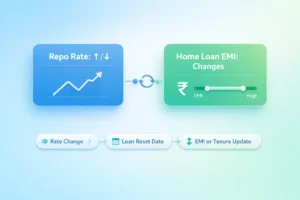
Repo rate is the rate at which RBI lends to banks, so when RBI cuts or hikes repo, banks often change their lending rates, and that mostly impacts floating-rate home loans (especially those linked to an external benchmark like repo). (Reserve Bank of India) If repo goes up, your loan rate can go up, and then either your EMI increases, or the bank keeps EMI the same but extends tenure (many lenders prefer tenure change because it feels less painful monthly). If the repo goes down, your rate can be reduced, and you may see EMI drop or tenure reduced, but it may not happen instantly because lenders apply it on your loan’s reset cycle, and they must communicate any EMI or tenure change. (Reserve Bank of India) Fixed-rate home loans are mostly insulated, so repo moves won’t change EMI immediately there. Simple funda: repo change affects you only when your home loan rate is floating and linked to a benchmark, so check your loan type and reset date, warna you’ll keep wondering “rate cut hua, EMI kyun same hai” even though it’s just timing. (Reserve Bank of India)
 .
.