

Choosing between fixed and floating interest rates can feel confusing. The right choice depends on your income stability, loan tenure, market outlook, and risk comfort. Here is a clear India-focused guide to help you decide the best EMI plan for home, car, or personal loans.
What is a Fixed Interest Rate
A fixed rate stays the same for a defined period. Your EMI does not change in that time. It provides certainty and supports monthly budgeting. Some lenders keep it fixed for the whole tenure, while others keep it fixed for the first few years and then shift to a revised rate.
Good for:
- People who want predictable EMIs
- Short to medium tenure loans
- Times when rates are already low and you expect stability
Watch out for:
- Usually higher than the starting floating rate
- Prepayment or foreclosure charges can be stricter.
- You may miss benefits if market rates fall late.r
What is a Floating Interest Rate
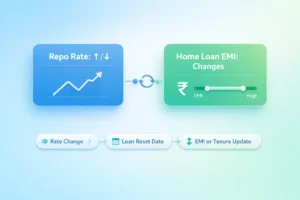
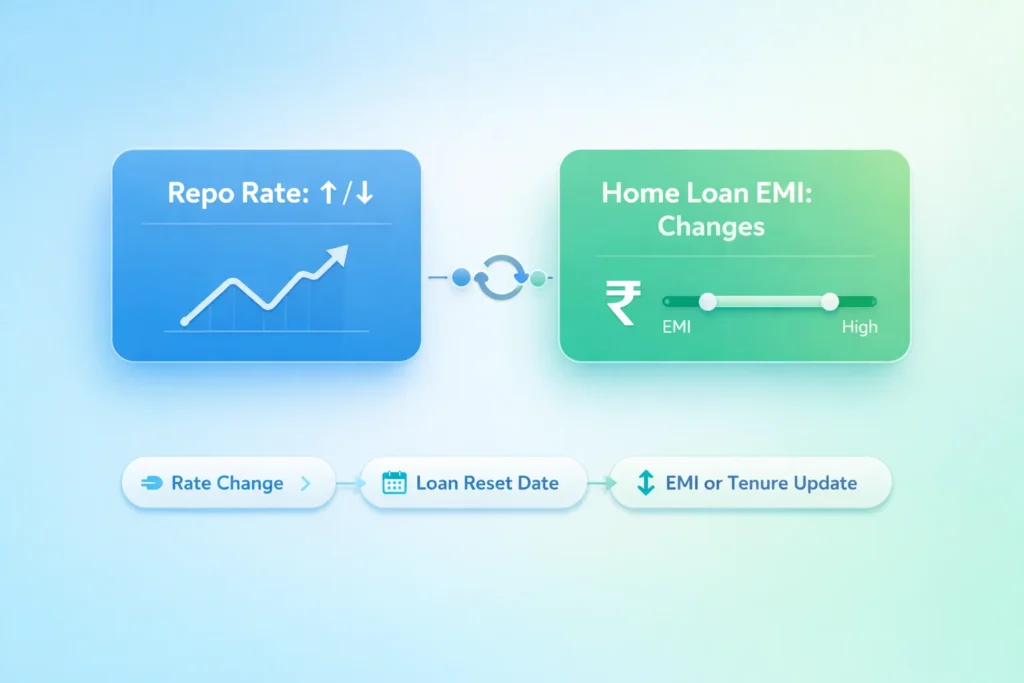
A floating rate moves with a benchmark such as the repo-linked rate. Your EMI or tenure may change when the lender revises rates. You benefit when rates fall, but your outgo can rise when rates climb.
Good for:
- Longer tenure loans, like home loans
- Borrowers who expect rates to fall
- People who can handle some movement in EMIs
Watch out for:
- Budgeting can get tricky if rates rise
- In some cases, the EMI stays the same, while the tenure increases.
- Rate change communication can feel complex if you do not track it
Fixed vs Floating: Quick Comparison
| Feature | Fixed Rate | Floating Rate |
| EMI predictability | High | Medium |
| Starting rate | Usually higher | Usually lower |
| Benefit when rates fall | No | Yes |
| Risk when rates rise | Low | High |
| Best for tenure | Short to medium | Medium to long |
| Prepayment charges | Can be higher | Usually lower |
| Budgeting ease | Easy | Needs tracking |
How Market Rates Influence Your Choice
In India, many lenders link floating rates to the RBI repo rate or other benchmarks. When repo goes up, floating rates tend to rise. When the repo goes down, floating rates may fall. If rates are near a peak, floating could help later. If rates are already low and likely to rise, a fixed rate can give you peace of mind.
Who Should Choose Fixed
- Salaried users with tight budgets who cannot handle EMI changes
- Short-term loans where the rate difference is small
- First-time borrowers who want stable monthly planning
Who Should Choose Floating
- Home loan borrowers with a 15 to 25-year tenure
- People are expecting rate cuts in the next few years.
- Borrowers with cash buffers who can handle EMI spikes
Hybrid or Flexi Options
Many banks offer a mix. Part of the loan is on a fixed rate, and part on a floating rate, or a fixed rate for the first few years with a shift later. This reduces risk while letting you benefit if rates fall. Ask your lender for the exact terms and switching rules.
Can You Switch Later
Yes. Most lenders allow you to switch from fixed to floating or vice versa. There may be a small conversion fee. Calculate the total savings before switching. Also, check if switching resets your tenure or affects prepayment rules.
Practical Example
- Amit in Pune takes a 20-year home loan. He expects rates to soften next year. A floating rate suits him because even a small drop over a long tenure can save lakhs.
- Priya in Bengaluru has a 4-year car loan and a tight monthly budget. A fixed rate suits her because she wants steady EMIs and a short tenure.
How Your Credit Profile Affects the Rate
Banks give better rates to users with a clean credit history. Before you apply, reduce card utilisation, pay all bills on time, and check your report for errors. You can track your profile on a trusted check credit score tool so you negotiate with confidence.
Fees You Should Compare
- Processing fee
- Legal and valuation charges for home loans
- Prepayment and foreclosure rules
- Switching or conversion fee between fixed and floating
Simple Decision Checklist
- Tenure longer than 10 years, and you expect rate cuts
- Consider floating
- Consider floating
- Tight monthly budget and short tenure
- Consider fixed
- Consider fixed
- Unsure about the cycle and want balance
- Consider a hybrid product.
- Consider a hybrid product.
- Already on floating and worried about rising EMIs
- Increase part prepayments when possible or switch to fixed after comparing costs.
Common Mistakes to Avoid
- Picking the lowest teaser rate without checking the reset terms
- Ignoring fees and penalties
- Not reading how EMI versus tenure will change after the rate moves.
- Applying with a weak credit profile and accepting a high rate
Choosing fixed or floating is not about right or wrong. It is about what suits your cash flow and risk comfort today, and how you expect rates to move tomorrow.
Bas itna samajh lo. Budget tight hai to fixed theek rahega. Long tenure aur rate cut ki umeed ho to floating ka fayda milega. Credit profile clean rakho, numbers compare karo, phir sign karo.