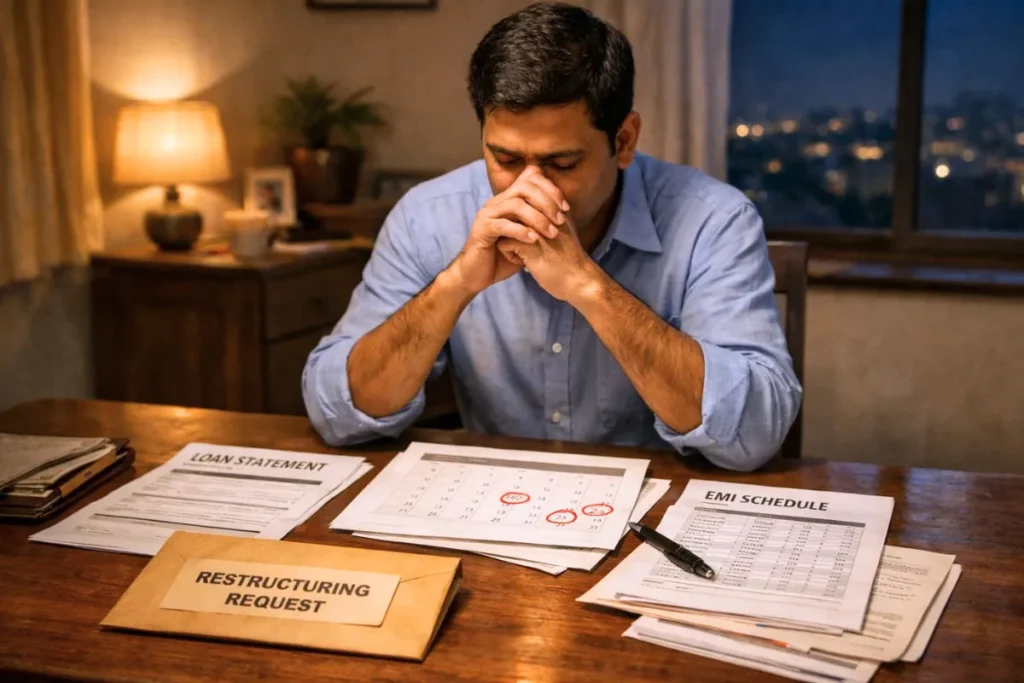


An EMI bounce occurs when your bank is unable to collect the monthly instalment on the due date. This could be due to a low balance, a wrong mandate, an expired card, or a technical issue. An EMI bounce can lead to bank charges, late fees, and most importantly, a negative mark in your credit report if not corrected quickly. Knowing the impact and the proper steps to recover will save you money and protect your loan eligibility.
What really happens when an EMI bounces
- Bank charges
Your bank or lender may add a bounce fee and a late payment charge. - Overdue status
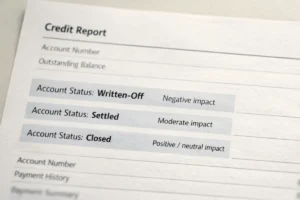
If the EMI is not cleared soon, your account is marked overdue for that month. - Credit report entry
Lenders report your repayment history to bureaus every cycle. A missed EMI can show up as a late mark for that month. - Collection follow-up
You may receive reminders or calls until your dues are cleared.
How a missed EMI hits your credit score
Your score depends heavily on on-time payments. A single delay can pull the score down, and repeated delays have a larger impact. Bureaus often reflect late payments in buckets like 30 days, 60 days, and 90 days past due. The longer the delay, the stronger the negative signal. Even after you repay, the late mark can remain on your report for months, affecting future applications.
Impact on loan eligibility and interest rates
- Tougher approvals
A recent late payment makes lenders cautious. Some may reduce the sanctioned amount or request additional documents. - Higher interest
Clean files get better rates. A recent bounce can push your offer into a higher slab. - Lower card or loan limits
Banks may tighten limits or avoid pre-approved offers for a while. - Home or car loan timing
If you plan a big loan soon, a fresh late mark can delay approval. Lenders prefer 6 to 12 months of perfect history.
What to do if an EMI bounces by mistake
- Pay the EMI immediately
Clear the full amount on the same day if possible. - Inform the lender
Share a payment receipt and request a reversal of the late fee if the issue was technical and your track record is clean. - Check the mandate
Update NACH, standing instructions, or card expiry so it does not fail next month. - Monitor your credit report.
In the next cycle, confirm that the month is not wrongly marked as late. If it is, raise a dispute with proof of timely payment.
How to prevent EMI bounces
- Keep a buffer
Maintain a dedicated account with a balance for EMIs. Fund it one day before the debit date. - Change the due date
If your salary is credited mid-month, ask the lender to move the EMI date closer to the salary credit date. - Enable auto debit and alerts.
Use standing instructions plus SMS or calendar reminders three days before the due date. - Avoid last-minute payments.
UPI or netbanking can sometimes be delayed. Pay at least a day in advance if you are not on auto debit. - Track expiring cards and mandates
If your ECS or card on file is expiring, update your details at least a week in advance. - Build a small emergency fund.
Keep at least one month of EMIs aside so a surprise expense does not cause a bounce.
If cash is tight this month
- Make a part payment before the statement date.
Reduces interest on revolving balances for credit cards and shows intent to pay. - Ask for an EMI reschedule
Some lenders offer a short grace period or a temporary plan if you request help before the due date. - Cut the optional spending for one cycle.
Skip non-essential purchases so the EMI clears without stress. - Avoid new credit
New applications can add enquiries and further reduce your score during a tight phase.
How to rebuild after a bounce
- Pay the next 3 to 6 EMIs on time without fail.
- Keep credit card usage below 30 percent of the limit.
- Avoid multiple new applications while you stabilise.
- Review your report every few months using a trusted improve credit score tool to track recovery.
Quick checklist before the next due date
- Balance in the EMI account is ready
- Auto debit or mandate is active and correct.
- Reminders are set three days before the due date.
- A backup payment method is handy if auto-debit fails.
An EMI bounce does not mean your credit journey is over. Fix it quickly, keep payments disciplined, and your profile will recover.
Bas itna samajh lo. Due date se pehle paise ready rakho, auto debit lagao, aur report pe nazar rakho. Ek do mahine me sab theek ho jata hai, score bhi wapas stable ho jata hai.