

Many people in India use the terms’ credit score’ and ‘credit report’ interchangeably. They are connected, but not identical. Knowing the difference helps you apply for loans confidently and avoid surprises during the approval process.
What Is a Credit Score
A credit score is a 3-digit number that shows how safely you use and repay credit. In India, bureaus like CRIF High Mark, CIBIL, Experian, and Equifax calculate this number. Scores usually range from 300 to 900. A higher score means lower risk for lenders and better loan offers for you.
What Is a Credit Report
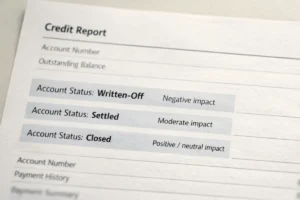
A credit report is your full credit file. It lists your loans, credit cards, limits, outstanding amounts, monthly repayment history, any late payments, and recent lender enquiries. It also stores your personal details, such as your name, PAN, and address. Lenders check the report to understand your behaviour over time, not just a single number.
Credit Score vs Credit Report
- Format
Score is a single number. The report is a multi-page document with detailed sections. - Purpose
Score gives a quick snapshot. The report provides the full context behind that number. - Use by lenders
Score helps shortlist. The report helps with final approval. - Update cycle
Both update after lenders send fresh data, usually every month. - What you should review
Track the score often and read the report line by line every few months.
Why Both Matter for Indian Users
Banks and NBFCs want to see that you pay on time and do not depend too much on credit. A strong score gets attention. A clean report seals the approval. If your score is good but the report shows recent missed EMIs or very high card usage, the lender may still say no or offer a higher rate.
How Credit Scores Are Generally Calculated
While exact formulas differ across bureaus, these factors matter the most:
- Payment history on loans and cards
- Credit utilisation on credit cards
- Age of credit and length of relationships
- A mix of credit across secured and unsecured loans
- New enquiries raised by lenders when you apply
How to Read Your Credit Report Quickly
- Check your personal details for spelling and PAN accuracy.
- Review all accounts for limits, outstanding amounts, and status (active or closed).
- Scan repayment history for any late marks that look wrong.
- See enquiries to ensure only your applications are listed.
- Confirm overdue amounts are zero if you have paid.
Common Confusions Cleared
- A high score does not guarantee approval if the report shows recent late payments.
- One bureau may show a slightly different score than another because the data reached them at other times.
- Checking your own score is a soft check. It does not reduce your score.
When to Check Score and When to Read Report
- Check the score every month or before a planned loan. It is a quick health check.
- Read the report every 3 to 6 months. It helps you catch errors and understand patterns.
If you spot a mistake, raise a dispute with the bureau and inform the lender who reported the data.
Practical Tips to Keep Both Strong
- Pay every EMI and card bill on time.
- Keep credit card usage under 30 percent of the limit.
- Avoid too many loan or card applications in a short period.
- Maintain older accounts to show a more extended history.
- Review your CRIF file regularly using a trusted, improve credit score platform and track changes.
A wise borrower watches both the number and the story behind it. Score tells you where you stand today. The report tells you how you reached there and what to fix.
Bas itna samajh lo. Score high raho, report clean rakho: time par payment karo, usage control mein rakho, aur credit journey smooth ban jayegi.