

Many people in India only check their credit score and ignore the detailed report behind it. But lenders do not rely solely on the score. They study your full credit report to understand how you have handled loans, credit cards, and EMIs over time. If you learn to read this report correctly, you can catch mistakes early, understand your credit behaviour better, and improve your chances of getting loans at reasonable interest rates.
A credit report is not complicated. It simply tells the story of how you use and repay credit. Once you know what each section means, you can manage your financial decisions more confidently.
What Is a Credit Report
A credit report is a document prepared by RBI-licensed bureaus like CRIF High Mark, CIBIL, Experian, and Equifax. It contains your full credit history, which includes every loan, credit card, payment, and enquiry linked to your name and PAN. Banks and lenders use this report to decide if they should approve your application.
What Your Credit Report Contains
A typical credit report in India is divided into important sections. Each part gives lenders a different view of your financial habits.
Personal Information
This section contains your basic details such as name, phone number, email, PAN, address, and date of birth. Make sure this section is always correct. Sometimes spelling errors or old addresses create confusion. In some cases, incorrect details can result in a loan that isn’t yours being linked to your report. Check this part carefully.
Credit Accounts
This is the most critical part of your credit report. It lists all the credit cards and loans you have ever taken. This includes personal loans, home loans, car loans, consumer loans, and even small digital loans from apps.
For each account, your report shows:
- Type of loan or credit card
- Total loan amount or credit limit
- Current outstanding balance
- EMI amount
- When the loan was opened
- Whether the account is active or closed
- Monthly repayment history
If you find a loan or credit card that you never applied for, it means there is an error that needs to be corrected soon.
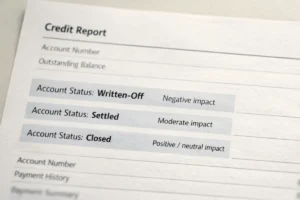
Repayment History
This section shows how regularly you have paid your EMIs and credit card bills. It marks each month as:
- 000 or STD for on-time payment
- Numbers like 30, 60, or 90 for late payments
- Written off or settled if you did not clear the dues fully
Even a single late payment can show up in this section and affect your credit health. Many people only realise mistakes when they apply for a loan and the bank rejects it. That is why checking repayment history often is essential.
Credit Enquiries
Whenever you apply for a loan or a credit card, the lender checks your credit report. This is recorded as a hard enquiry. A few enquiries are regular. But if you apply too many times within a short period, it may signal that you are under financial pressure. This can reduce your credit score.
Check this section to ensure there are no unnecessary enquiries.
Credit Utilisation
If you use credit cards, this section shows how much of your credit limit you use every month. Heavy use suggests you depend heavily on credit. Try to keep your usage below 30 percent of your total limit. For example, if your limit is 1 lakh rupees, spending under 30 thousand rupees is ideal. This helps maintain healthy credit behaviour.
Overdue Amounts
This part lists unpaid EMIs and pending credit card balances. Even a small overdue amount can harm your credit standing. Make sure all amounts show zero unless you genuinely have something pending. Often, old accounts show dues because lenders forgot to update their records.
How to Read Your Credit Report Properly
When you receive your credit report, follow these steps:
- Check personal details – Ensure your name, PAN, contact number, and address are correct.
- Review your accounts – Go through each loan or credit card listed. Confirm the limits, outstanding balances, and closure details.
- Study repayment history – Check if all your timely payments are marked correctly. Sometimes lenders delay updates.
- Spot unknown accounts – If you see an account you never opened, raise a dispute immediately.
- Review enquiries – If there are too many recent enquiries, avoid applying for new credit for a few months.
- Check credit utilisation – If your usage is high, reduce credit card spending for a while.
Why You Should Check Your Credit Report Regularly
Most people check their credit report only when applying for a loan. But by then, it may be too late to fix errors. Checking your credit report every few months helps you:
- Understand your credit health
- Catch mistakes early
- Plan loan applications better.
- Stay on top of repayment behavior.
You can view your CRIF report through a simple check credit score platform and track your credit health easily.
Final Thoughts
A credit report is not something to fear. It is a simple record of how you manage money. When you know how to read it, you make smarter financial choices.
Bas itna samajh lo. Report clean rahi to credit score strong rahega. Time par payment, low usage, aur regular checking se aap apna credit future secure rakh sakte ho.