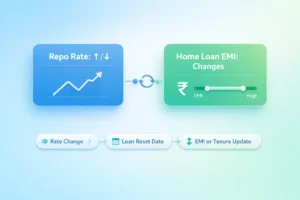

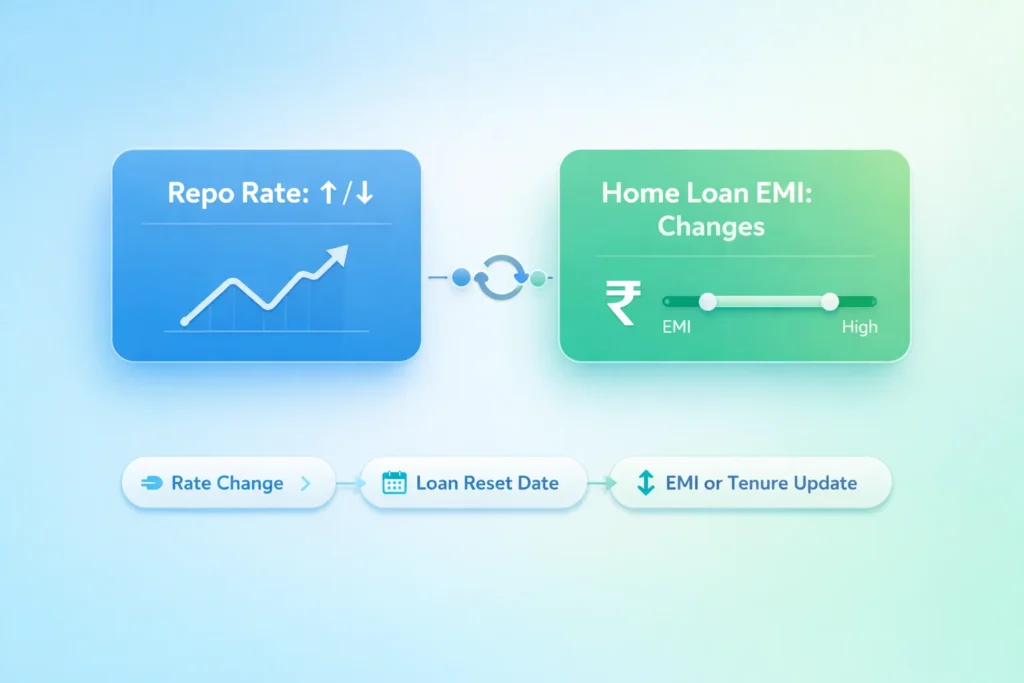
When the RBI changes the repo rate, it can affect floating-rate home loans, especially those linked to an external benchmark such as the repo rate. If repo goes up, your loan interest rate may rise. If the repo goes down, your rate may be reduced. But your EMI usually does not change the same day. Most lenders apply changes on a reset cycle, and they must inform you if the EMI or tenure changes due to the benchmark move. (Reserve Bank of India) In many cases, banks keep the EMI similar and increase the tenure, so the loan runs longer. That feels easier month to month, but you pay more total interest. Another common reason people feel confused is timing: repo-linked loans can still update only on the scheduled reset date, which may be quarterly or half-yearly. (ET Edge Insights) What you should do: check your loan type (repo-linked or not), find your next reset date, and see whether the bank is changing EMI or tenure. If the tenure is stretching too much, ask the lender if you can keep the tenure the same by increasing the EMI slightly.
Source: RBI (External benchmark communication) (Reserve Bank of India)