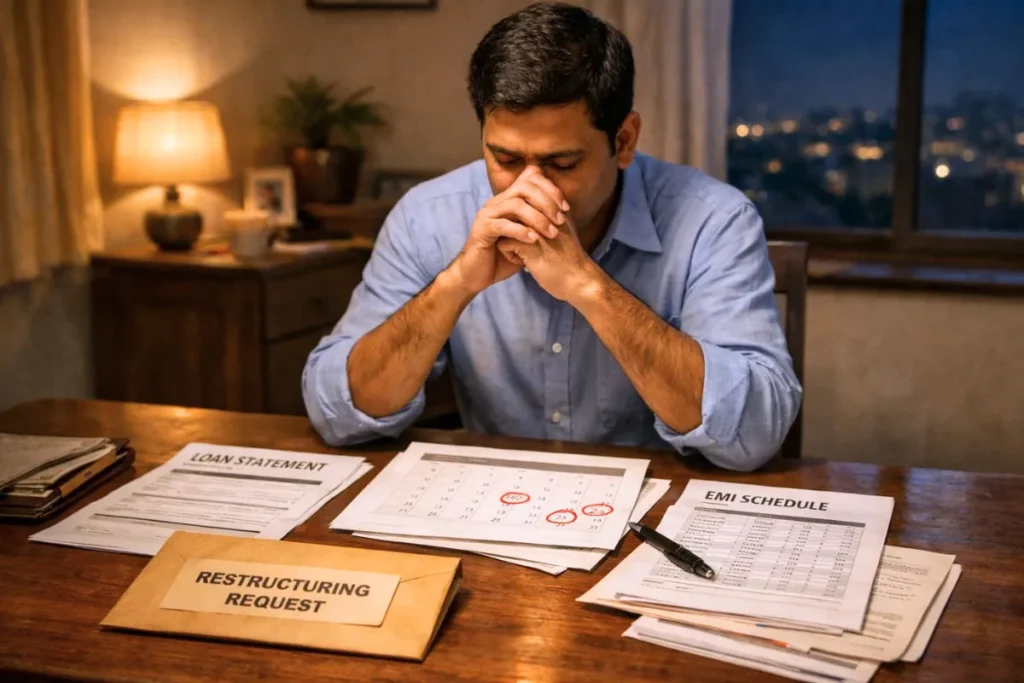

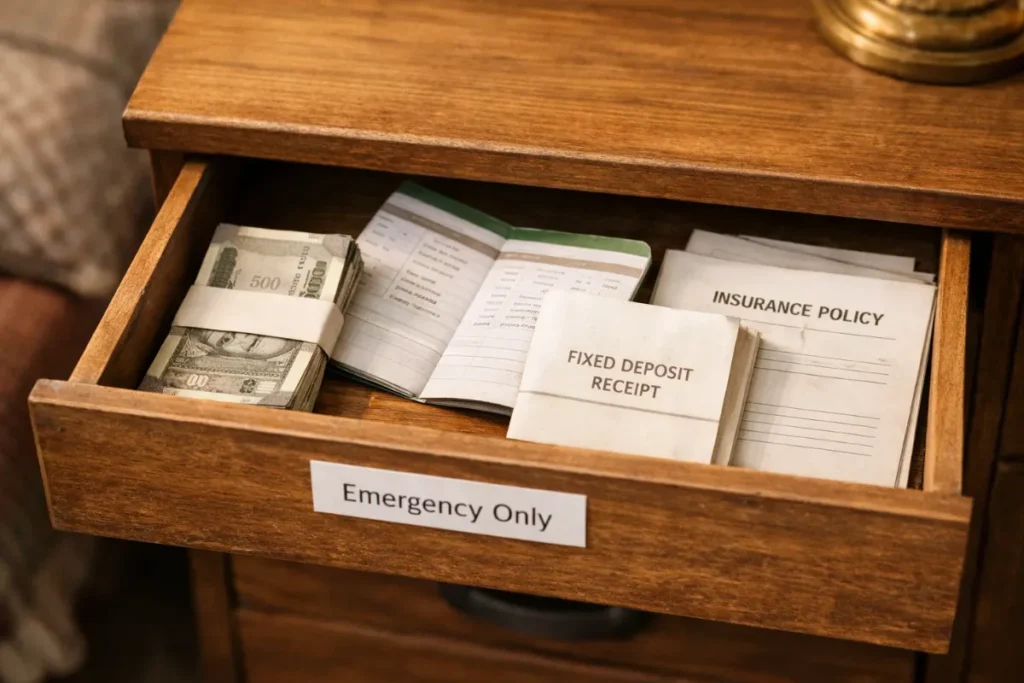
An emergency fund is your financial seatbelt. In India, it’s what saves you from credit card debt, personal loans, or missed EMIs when life throws a surprise like a medical bill, job gap, or sudden travel.
What is an emergency fund?
It’s money kept only for real emergencies, not for planned expenses like shopping, festivals, or vacations. Think of it as a “cash buffer” that keeps your monthly budget stable even when something goes wrong.
How much emergency fund should you keep in India?
There’s no one perfect number, but these ranges work well for most Indian households.
If you are salaried with a stable job
Keep 3 months of essential expenses.
Essential means rent or home loan EMI, groceries, utilities, school fees, basic transport, and medicine.
If you are salaried but your job is uncertain, or you have EMIs
Keep 6 months of essential expenses.
If you have multiple EMIs, a bigger buffer is safer because EMI bounces can hurt your credit profile and add penalties.
If you are self-employed or your income is irregular
Aim for 6–9 months of essential expenses.
Income gaps can happen, and you don’t want to depend on borrowing during slow months.
Quick example
A family spends ₹45,000 per month on essentials (including EMIs).
- 3 months fund = ₹1,35,000
- 6 months fund = ₹2,70,000
Start small if this feels big. Even building the first ₹50,000 gives real peace of mind.
Where should you keep your emergency fund?
An emergency fund has two rules: it must be safe and quickly available. High returns come later.
Option 1: Savings account (best for immediate access)
Keep at least 1 month of essentials here.
This is your “today money” in case you need to pay within minutes.
Option 2: Sweep-in or short-term fixed deposit (best balance)
Keep the next 2–5 months here.
A sweep-in FD allows funds to be moved into savings when needed. Even a normal FD can work if the bank allows early withdrawals. The point is: it should be easy to break.
Option 3: Liquid or overnight mutual funds (for the next layer)
This can work for a part of the fund if you want slightly better returns. But don’t keep your entire emergency fund here, because redemptions can take time and markets can experience small fluctuations.
Best structure for most Indians
A simple, practical setup:
- 1 month in a savings account
- 2–5 months in sweep-in/short FD
- Optional: a small part in a liquid fund if you are comfortable
This way, you get access + safety without overthinking.
What not to do
- Don’t keep an emergency fund in equity or long-term lock-in products
- Don’t invest it in “high return” schemes that are hard to withdraw from
- Don’t keep it in cash at home beyond a small amount
- Don’t mix your emergency fund with your daily spending account; it slowly disappears
How to build it without stress
- Start with a fixed monthly auto-transfer on salary day
- Use bonuses or refunds to top it up
- Increase it gradually when your income increases
- Treat it like a mandatory bill, not an optional saving
Why an emergency fund helps your credit health
When emergencies hit, people usually swipe credit cards or take quick loans. That increases debt and can push missed payments if cash flow gets tight. With an emergency fund, you avoid that cycle. It helps you stay consistent with EMIs and keeps your profile loan-ready. You can also check credit score once in a while to make sure your repayment history stays clean.
FAQs
How is an emergency fund different from a sinking fund?
An emergency fund is for unexpected problems. A sinking fund is for planned annual expenses, such as insurance renewals or school fees.
Should I keep an emergency fund in a fixed deposit?
Yes, a part of it. Keep 1 month in savings, then use short FD or sweep-in for the rest so you can access it quickly.
Can I use my credit card as an emergency fund?
Not a good idea. It’s expensive if you can’t repay in full, and it can create a debt trap.
How fast should I build it?
Aim for the first ₹50,000 as a starter goal. Then move towards 3 months of essentials.
Can I invest my emergency fund in mutual funds for higher returns?
Only a small portion, and only in liquid or overnight funds. Safety and quick access matter more than returns.